
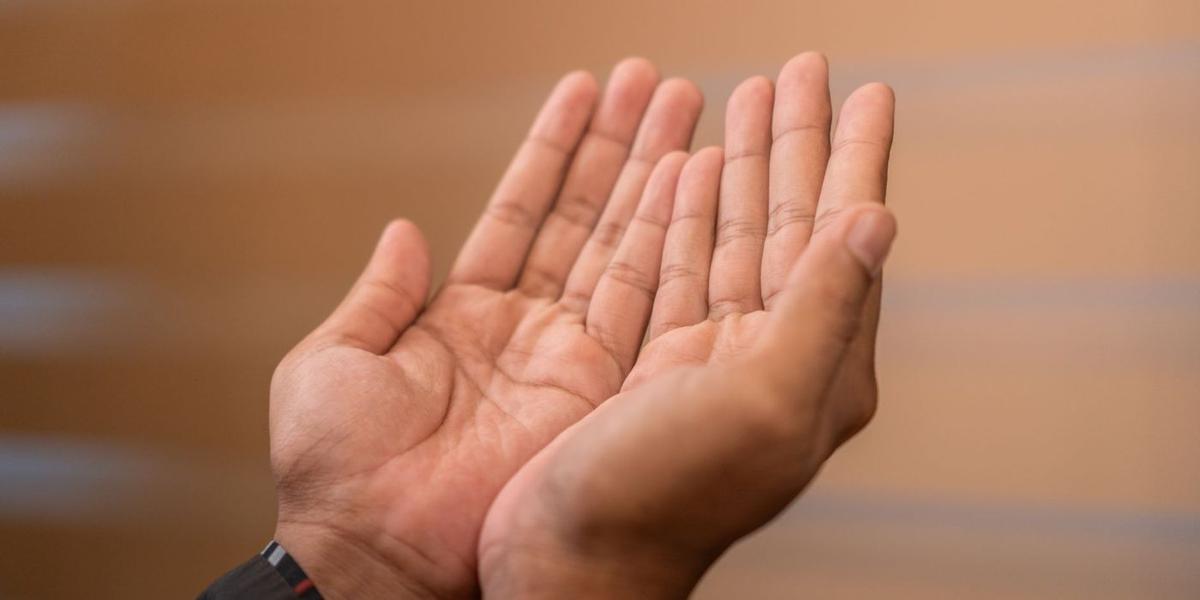
Ameen (also spelled Amin) is the short affirmation Muslims say to seal a prayer or dua. In everyday English it sits close to “so be it” or “amen”: you are joining the request, not starting a new topic. If you want the bigger picture of why short Arabic lines stay in English conversation, start with why Muslims use Arabic expressions.
What does Ameen mean?
Wikipedia’s overview of Amen notes the Arabic form ʾāmīn (آمين) in Islam: it concludes a prayer or dua and is said after Al-Fatihah in salah, as assent to the words just spoken. Wiktionary glosses the Arabic interjection simply as “amen.”
Common English glosses you will hear: “so be it,” “truly,” or “O Allah, accept / answer.” Those are conversational shortcuts. The core job is affirmation of a prayer, not small talk.
How is Ameen written and pronounced?
Arabic:
آمِينَ
English spellings on this site fold together under one URL: Ameen, Amin, and (in mixed company) Amen. They point at the same Arabic word in Muslim speech. Approximate pronunciation: aa · meen. Learn careful Arabic sounds from a teacher if you need recitation accuracy; this guide is conversational.
When do Muslims say Ameen?
Typical moments:
- After someone makes a dua (a spoken request to Allah), including short everyday ones.
- After Al-Fatihah in prayer, when the recitation of the opening surah ends.
- When you want to join a prayer someone else just voiced, without adding your own long wording.
After a friend’s dua:
Ameen.
After a group prayer for someone who is unwell:
Ameen. May Allah make it easy for them.
These are ordinary conversation examples, not scripture.
How do you respond when you hear Ameen?
Ameen is not a greeting like Assalamu Alaikum, and it does not come with a different reply formula. If someone ends a dua with Ameen, or an imam says Amin after Al-Fatihah, the usual move is to say Ameen yourself.
Ameen.
If you are not Muslim and prefer plain English after someone includes you in a prayer:
Thank you. I appreciate that.
Whether every setting requires a spoken Amin is a question for qualified teachers. This page reports the well-known hadith encouragement to say it with the imam; it does not invent a rule for every private chat.
Why does Ameen follow Al-Fatihah?
Al-Fatihah ends with the line asking for the straight path (Quran 1:7). Amin is not written as part of that verse in the Mushaf. It is said after the recitation, as affirmation of the request.
Sahih al-Bukhari 782 narrates that when the imam reaches the end of Al-Fatihah, the followers should say Amin, and mentions forgiveness of past sins when that saying coincides with the angels’. Sahih Muslim 410a carries the same theme: say Amin when the imam does. Jami’ at-Tirmidhi 248 (graded Sahih by Darussalam on Sunnah.com) reports that the Prophet said Amin after those words and stretched it with his voice.
That is the sourced prayer context. It is not a full guide to how to pray. Schools of law discuss how loud or soft the Amin should be; this page leaves that disagreement to scholars rather than picking a side.
Ameen compared with other expressions
Each phrase does a different conversational job:
- Alhamdulillah names praise and thanks.
- Inshallah ties a plan or hope to Allah’s will.
- Mashallah marks admiration of a good thing already present.
- Bismillah opens an action in Allah’s name.
- Assalamu Alaikum greets with a wish for peace.
- JazakAllahu Khairan thanks a person by asking Allah to reward them.
Ameen closes a prayerful request. It is the seal, not the greeting and not the opening. For wonder and exaltation instead, see SubhanAllah.
Common questions
Are Ameen, Amin, and Amen the same word?
In Muslim English speech, Ameen and Amin are the usual spellings of Arabic آمين. Amen is the familiar English form of the same Abrahamic affirmation. This page covers the Muslim usage under one entry so spellings do not split into thin duplicates.
Is Ameen written in the Quran?
The affirmation is tied to Al-Fatihah’s closing request, but Amin itself is not part of the Quranic verse text in the Mushaf. It is said after the recitation.
Do I have to say it loudly?
Sources checked here encourage saying Amin with the imam after Al-Fatihah. How loud or soft that should be is discussed differently across schools. We are not settling that dispute on this page.