
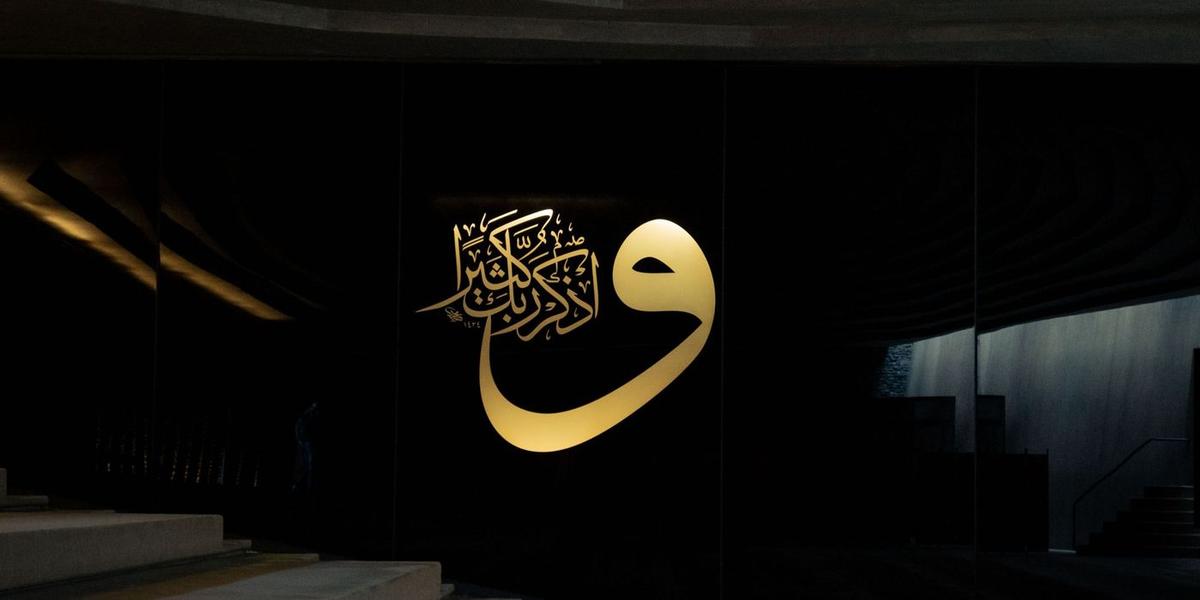
You hear Mashallah in group chats, at the dinner table, and in the office when someone names a blessing out loud. In plain English it means what Allah has willed. Cambridge’s entry also glosses it as God has willed it. Tone is usually warm compliment, not scolding.
What Mashallah means in plain English
Cambridge Dictionary lists Mashallah among everyday Muslim praise or thanks for a good outcome tied to Allah’s will. Put simply: the healthy child, the finished degree, or the sharp joke is not framed as random luck or as the speaker’s own power alone. Timing matters: speakers aim it at what already is, which is how it parts company with Inshallah.
Wikipedia’s short overview groups the phrase with appreciation, awe, and thankfulness, and notes that some speakers also reach for it when they want to name a blessing without sounding envious.
Writing and saying Mashallah
Arabic:
مَا شَاءَ اللَّهُ
Careful transliteration: Mā shāʾ Allāh. Chat spellings collected here: Mashallah, MashaAllah, Ma Sha Allah. Sound guide: maa · shaa · Allah.
Keeping those Latin forms on one URL avoids three near-duplicate leaves for the same expression.
Moments people reach for it
Typical triggers: exam results, a newborn, food that turned out well, work someone is proud of. The shared move is crediting Allah instead of bare chance.
Hearing good news:
Mashallah. Congratulations on your hard work!
Meeting a new baby:
Mashallah. She's beautiful.
For more newborn congratulations speech (texts, visits, what to skip), see what to say when someone has a baby in Islam.
These are everyday conversational examples, not quotations from religious sources.
What to say back
Unlike the salaam, Mashallah does not lock you into one reverse line. If the phrase landed on your work, your child, or your home, a short warm reply is enough.
Thank you. I'm glad it was useful.
Common etiquette replies (speech samples, not a required script):
Alhamdulillah.
JazakAllahu Khairan.
Barakallahu Feek.
Deep links for those lines: Alhamdulillah, JazakAllahu Khairan, Barakallahu Feek.
Is there a required Islamic response?
Sunan Ibn Majah 3509 records that when Amir ibn Rabi’ah admired Sahl ibn Hunaif without asking Allah’s blessing, the Prophet (peace be upon him) said he should have prayed for blessing. Islam Question & Answer’s discussion of the evil eye includes scholarly explanations of blessing wording used when admiring someone or something.
Checked sources so far put the recommended step on the admirer (pray for blessing over what they praise), not on a fixed line the admired person must return. No mandatory recipient formula showed up in the set we used. That is a report of those sources, not a claim that none exists anywhere. Send evidence via the contact page if you have it.
Does the Quran mention this wording?
The words ma sha Allah occur in Quran 18:39, in the account of two men and a garden. Read the verse with its surrounding passage. The phrase appearing in a verse and a rule about how to answer a compliment are two separate claims. This page treats them as such.
Envy and the “evil eye” talk
In some communities, speakers treat the phrase as a soft guard when they praise a blessing, hoping not to invite envy. Wikipedia records that everyday association. For rulings, the trail we cite is narrower: ask Allah’s blessing when you admire (Ibn Majah 3509 and related notes above). Stronger “auto-protect” or diagnosis claims are not treated as settled on this page.
Nearby phrases people mix up
Quran 18:23–24 instructs saying “if Allah wills” when speaking about something intended for the future. Inshallah looks forward (“I’ll see you tomorrow, inshallah”). Mashallah looks at something that already is.
Quran 1:2 opens with praise, “All praise is for Allah.” Alhamdulillah is praise and gratitude in general. Mashallah ties admiration of a specific good to Allah’s will.
Allahumma Barik asks Allah directly for a blessing on what you are looking at. Speakers sometimes stack Mashallah with Allahumma Barik, or with Tabarakallah (“blessed is Allah”) in the same breath. Those are nearby blessing phrases, not replacements for Mashallah’s “what Allah has willed” sense.
Full side-by-side pages: Mashallah vs Inshallah, Mashallah vs Alhamdulillah, Mashallah vs Allahumma Barik.
Can non-Muslims say Mashallah?
We looked for a ruling on this and only found material addressing related cases that do not settle the question cleanly. We are leaving it open rather than guessing.
If you are not Muslim and someone says Mashallah to or about you, treat it as a compliment grounded in gratitude. A simple thank-you is enough.
Thank you!
Common questions
Why are there different English spellings?
Mashallah, MashaAllah, and Ma Sha Allah are transliterations of the same Arabic phrase. This page covers all of them so you land in one place.